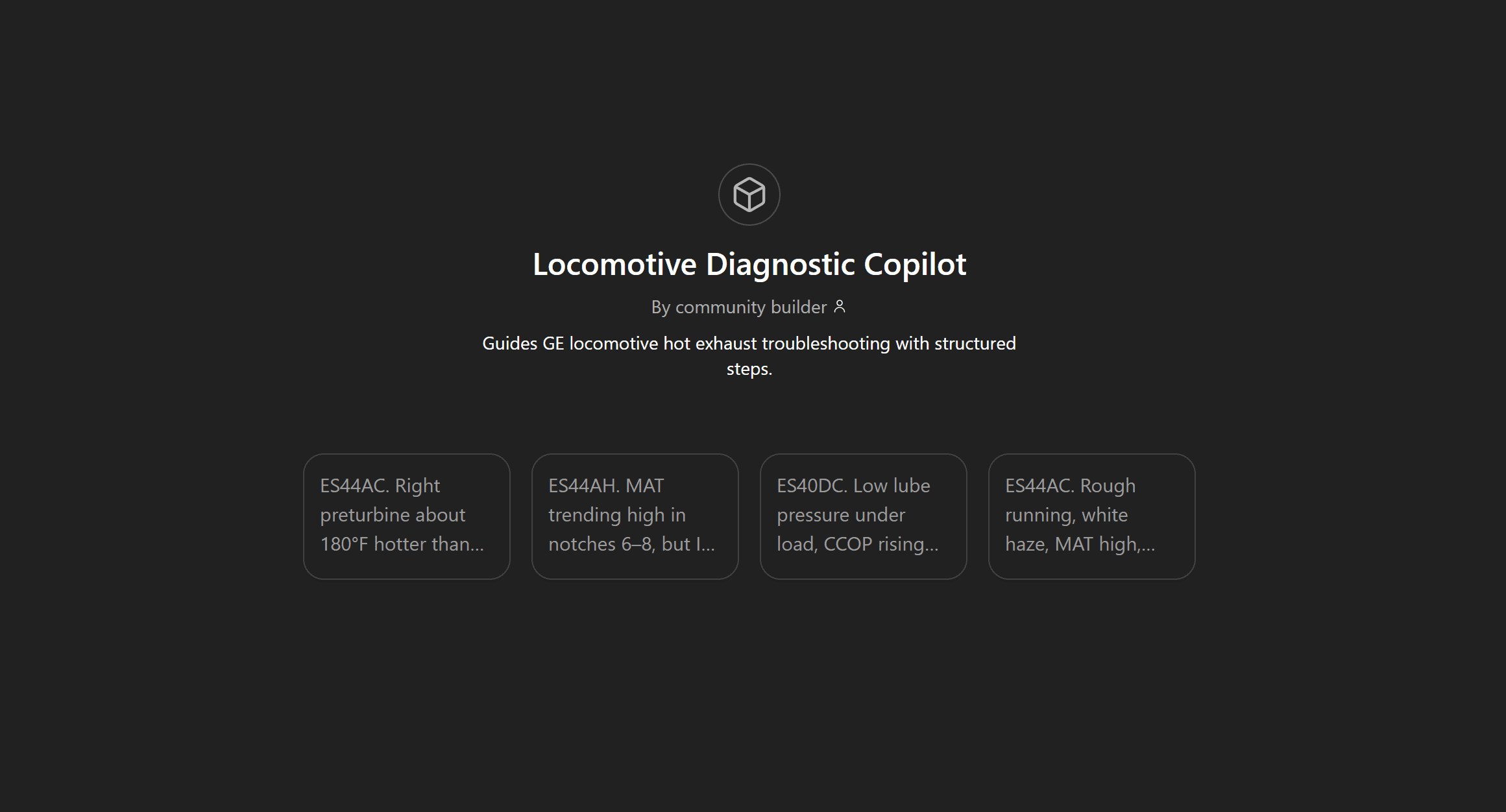
A guided, structured diagnostic workflow modeled after real SE scoping patterns. Turns messy locomotive symptoms into clear next-step decisions a technician can act on.
Overview
This project converts hands-on locomotive troubleshooting into a repeatable clarification engine.
It shows how a Sales Engineer structures ambiguity, reduces noise, and leads a customer toward the right root-cause path.
The system takes unstructured failure descriptions, asks targeted clarifying questions, proposes ranked hypotheses, and outputs step-ready verification procedures.
This mirrors how SEs support frontline operators and industrial customers when the signals are unclear but the decisions matter.
What It Does
Clarifying question engine that reduces ambiguity and accelerates scoping
Ranked root-cause suggestions modeled like a SE’s consultative reasoning
Step-by-step verification flows that technicians can use with customers or in support workflows
Structured outputs suitable for dashboards, ticketing systems, or knowledge-base ingestion
Failure-pattern recognition that maps locomotive symptoms to known GEVO modes
Tech Stack & Business Value
Stack: GPT model, structured prompt logic, pattern-matching rules, verification flows.
Business Value:
Demonstrates ambiguity handling
Shows how I turn vague, high-stakes failure descriptions into actionable diagnostic paths.Models real SaaS troubleshooting workflows
Mimics the communication style and reasoning patterns used in connected-operations, IoT, and industrial support teams.Translates technical depth into customer clarity
Displays my ability to explain complex systems without drowning users in jargon.Signals consultative problem-solving
The exact skill mid-level SEs are evaluated on; structuring chaos, identifying the right questions, and guiding users with confidence.